You have written something worth sharing. Maybe it is a novel you have been carrying around in your head for years. Perhaps it is a business book that captures everything you learned the hard way while building your company. Maybe it is a memoir, a self help guide, a collection of stories, or a children’s book you created for someone you love more than anything. Whatever it is, you got it written. And now you are standing at the next big decision. How do you actually get this thing out into the world properly? This is the question that leads most writers and business owners straight toward professional book publishing services and honestly it is the right question to be asking at this stage.
Publishing looks very different today than it did even ten or fifteen years ago. The old path where your only real option was to spend years chasing literary agents and crossing your fingers that a traditional publisher eventually said yes is no longer the only way. It is not even the best way for a lot of people depending on what they are actually trying to accomplish. Real professional options exist now for authors and businesses of all kinds and understanding what those options look like will save you a lot of time, money, and frustration before you make any decisions.
Why the Publishing World Looks So Different Now
There was a time when self publishing carried a real stigma. It was seen as what you did when no one else would take your book. That perception has shifted in a big way and the reason it shifted is simple. The quality of independently published books got better. When proper professional book publishing services handle the production side of things, the finished book looks and reads exactly like anything coming out of a major publishing house. Most readers cannot tell the difference. Many of them are not even thinking about it.
Traditional publishing still exists and for some authors it genuinely makes sense. A major publisher brings real distribution reach, institutional credibility, and an advance payment. But it also means handing over a large portion of your rights, waiting one to three years between a signed contract and an actual book on shelves, and giving up most of your say over the cover, the title, the marketing strategy, and the release timeline. For writers who have a clear vision and want to stay in control of how their work goes out into the world, that trade off does not always make sense.
Hybrid publishing sits somewhere between the two. You invest in professional services, you keep more control, and you walk away with a higher share of your royalties than traditional publishing would ever offer. The quality is real and the support is real but you are the one making the final calls rather than waiting on someone else to decide your book is ready.
Which Publishing Model Is Right for You
Figuring out which model fits your situation is the most important conversation to have before anything else even begins.
What Actually Goes Into Publishing a Book Properly
Most people have no idea how many separate processes go into producing a book at a professional standard. It is not one thing. It is a whole sequence of work that needs to happen in the right order and at the right level of quality. When any part of that sequence gets rushed or skimped on, it shows up in the final product and readers pick up on it even when they cannot articulate exactly what feels off.
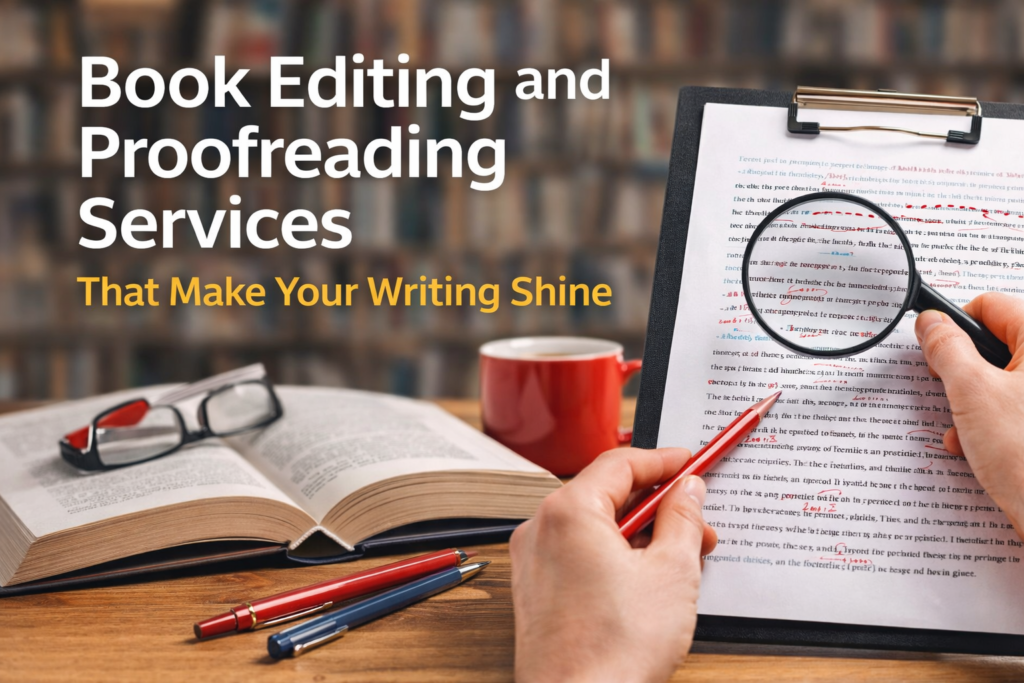
Manuscript preparation is where everything starts. Before a book moves anywhere near production it needs proper editing. That means developmental editing to make sure the overall structure and content are actually working, line editing to sharpen the writing and keep the voice consistent, and copyediting to catch every grammar issue and consistency problem in the text. A professional publishing service manages this whole editorial process and makes sure what goes into production is genuinely ready to be there.
Cover design matters more than most first time authors expect. Readers absolutely judge books by their covers regardless of how often we are told not to. A cover that looks like it was thrown together sends a signal before anyone reads a single word. A professionally designed cover that understands the visual language of your genre does the opposite. It earns attention and creates trust immediately. The best professional book publishing services work with designers who actually know genre aesthetics and understand how to create something that works as a tiny thumbnail on a phone screen and as a physical object someone picks up off a shelf.
From Formatting to Distribution: The Final Production Steps
Interior formatting is one of those things that nobody thinks about until they open a badly formatted book and realize how much it affects the experience of reading. The fonts, the margins, the spacing, the chapter headings, the way images or tables sit on the page. All of it contributes to whether a book feels like a real book or not. For print this work has to meet specific technical requirements for different printing platforms. For ebooks it has to display correctly across a range of devices and screen sizes. It is detailed work and getting it right genuinely matters.
ISBN registration and distribution setup is the infrastructure that connects your book to the system through which readers actually find and buy books. Without a proper ISBN your book cannot be listed or tracked in retail and library systems. Distribution determines where your book actually shows up, whether that is Amazon only or a wider network that includes independent bookstores, library suppliers, and international platforms.
ebook conversion is its own separate technical process entirely. An ebook needs to be built so that it flows and adapts properly across different reading apps and devices. Things that work fine in a print layout can break completely in an ebook if they are not handled correctly. A poorly formatted ebook generates complaints and negative reviews that are completely avoidable with the right work upfront.
Why So Many Businesses Are Publishing Books Right Now
Something that has become genuinely common over the past several years is businesses and executives using books as a serious part of how they build authority and position themselves in their industry. A well written, professionally published book does something that a website or a LinkedIn profile or even a decade of experience in a field cannot do on its own. It creates a level of credibility that is hard to achieve any other way.
For consultants, coaches, speakers, and anyone selling expertise or services, a book is often the most powerful tool they have for attracting the right kind of clients and getting invited to speak at the right kinds of events. It opens doors that would otherwise take years of relationship building to reach. It puts you in a completely different category from everyone else in your space.
For companies a book can lay out a philosophy, document an approach, or tell a founding story in a way that creates something lasting. It becomes a marketing asset that keeps doing its job long after the launch is over.
How Professional Publishers Support Business Authors
Professional book publishing services that work with business clients understand this context. They are not just putting a book together. They are helping create something that serves a real strategic purpose and the way it gets packaged, positioned, and distributed has to reflect that.
What to Look For Before You Commit to Anyone
Not every company offering publishing services is delivering the same thing. Some are essentially charging for basic formatting and an ISBN while calling it a full service publishing package. Others are genuinely comprehensive operations with experienced editors, skilled designers, and real distribution relationships that took years to build.
Ask to see actual books they have published and look at them honestly. Does the cover look like something you would notice in a bookstore? Does the interior feel clean and easy to read? Are the books showing up in the places where readers actually buy books?
Ask who will be working on your book specifically. Will your editor have real experience in your genre or subject area? Who are the designers and what does their work look like? What does the process look like if you need revisions?
Ask about rights clearly and early. You should always retain ownership of your own work. Any service that wants a share of your rights as part of a publishing arrangement is asking for something that has nothing to do with the services they are providing.
Understanding Royalties and Distribution Options
Ask about royalties and where your book will actually be available. The difference between Amazon only and genuinely wide distribution can be significant depending on where your particular readers buy books.
A Book Is an Asset That Does Not Expire
This is something worth sitting with for a moment. A professionally published book keeps working for you indefinitely. It does not go stale the way a social media campaign does. A reader who discovers your book three years after you published it has the exact same experience as someone who bought it on day one.
The authors and business owners who treat publishing as a real professional investment rather than something to tick off a list as quickly and cheaply as possible are the ones who end up with books they are still proud of years later. Books that keep opening doors. Books that keep finding new readers.
Professional book publishing services exist to make sure that everything you put into writing your book is matched by the quality of how it goes out into the world. The content deserved everything you gave it. The production deserves the same.
Your book represents real work and real thought and something genuinely worth sharing. Make sure the way it meets the world reflects all of that.