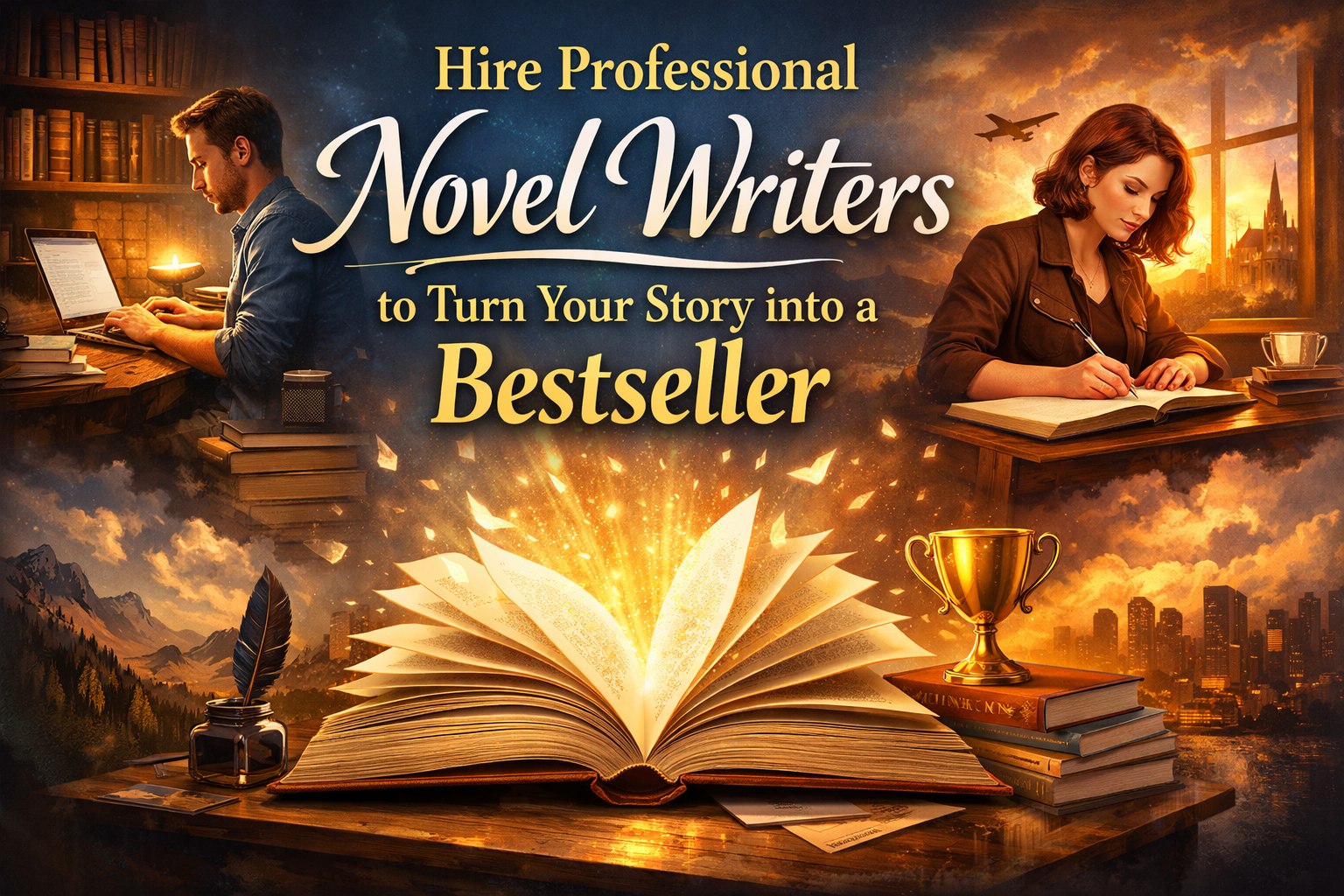
Let me tell you what actually happens when someone comes to us with a novel they have been meaning to write for years. They apologize first. For not finishing it sooner. For needing help. For not being a real writer. That apology tells you everything about why so many books never get made. People treat asking for help as a confession instead of a decision. Hiring professional novel writers is not something to explain away. It is how books that would otherwise stay inside someone’s head end up on shelves.
There is something worth saying directly here. Having a story does not automatically mean you have the skills to write 80,000 words of it in a way that holds a stranger’s attention. Those are different things. One is about imagination and experience. The other is a craft that takes years to develop. The people who do this well are not more creative than you. They have just done it enough times that they know where novels fall apart and how to stop that from happening.
You Already Know the Problem
Here is what most people describe when they call us. They started the book. They got forty or sixty pages in and then something happened. The story stopped feeling alive. Or they realized the structure was wrong and they did not know how to fix it. Or they just kept writing the same chapter over and over because something was off and they could not name what.
None of that is a talent problem. It is a craft problem. A structural problem. The kind of thing that a writer who has been inside a hundred novels knows how to diagnose in twenty minutes. The question is not whether the story is worth saving. It almost always is. The question is whether you want to spend the next three years figuring out how to fix it yourself or whether you want to bring in someone who already knows.
The idea was never the hard part. The hard part was always the 200 pages between page one and the ending I could already see.
On Getting Stuck
What These Writers Are Actually Doing
When professional novel writers take on a project, the first thing they do is not write. They listen. They ask about your story in ways that might feel uncomfortable, questions about what your main character is actually afraid of underneath the surface fear, about what was happening in your own life when the idea came to you, about the ending you keep imagining even if you have not written it down yet. All of that goes somewhere.
Then they build a structure that can hold the story you are trying to tell. Not a generic three-act framework dropped onto your plot. Something specific to your characters and your themes and the kind of reader you are writing for. That structure gets tested before a word of actual prose gets written. By the time chapter one starts, the writer already knows how the book ends and why every scene between now and then earns its place.
-
They write in your voice, not theirs
Voice matching is real work. Before anything gets written, a professional writer spends time learning how you talk, what you reach for when you are describing something, where your instincts are strongest. The finished pages should read like you on a day when everything came out right.
-
They know where novels break
The middle third of a novel is where most first books quietly collapse. Pacing slows, subplots lose their thread, the main character starts going through motions. A writer who has been through this enough times builds the architecture to prevent it before the writing starts.
-
They handle what you cannot see
You cannot edit your own blind spots. If a character’s motivation has been unclear since chapter two, you stopped noticing it fifty pages ago. Fresh eyes do not just catch errors. They catch the things you have learned to read around.
-
They stay inside the story, not in front of it
A good ghostwriter is invisible. Their job is to make the book feel like it could only have come from you. That requires a kind of ego suppression that is actually a professional skill. The writers who are best at this tend to be the ones who care more about the story than about being seen.
The Ownership Question
Almost everyone wonders this and almost nobody asks it out loud in the first conversation. Will it still feel like my book?
Short answer: yes. Longer answer: the book is built from your characters, your experience, your sense of what the story is supposed to do. The writer is inside that, not standing outside it with their own agenda. When the manuscript comes back to you, it should feel like reading something you always knew was there but could never quite get on the page. That is what a good collaboration actually feels like.
Ghostwriting is old. It predates publishing as an industry. Some of the most beloved novels in any genre were written by people whose names are not on the cover. Not because the author was dishonest but because writing and having a story are genuinely different skills and there is no law that says one person has to do both.
What We Do At Indus Valley Publishers
Some clients come to us with a full outline and need someone to write it. Others come with a half-finished draft that stalled. Others come with nothing but a real experience and a feeling that it should be a book. We work with all three. The process starts with a conversation where we figure out what your story actually needs, not what sounds most reassuring to say.
Finding the Right Writer Is Not About Credentials
The resume matters less than you think. A writer with an impressive list of published titles in a genre you are not writing in is the wrong person for your project. Genre instincts are specific. The things that make a great thriller move fast, the way a literary novel earns its slower moments, the particular emotional register of a good romance, these are learned by doing them over and over. Find someone who has done your kind of story, not just any story.
Ask for samples. Not a general portfolio. Ask to see the first ten pages of something in your genre. Read it the way your reader will. Does the voice pull you in? Does the pacing feel right for what you are trying to do? Does the character feel like someone with an actual inner life? Those three questions will tell you more than a CV.
Green Flags To Watch For In That First Call
They ask who you are writing this for before they ask about the plot
They push back on something, gently but clearly
They describe their process in concrete steps, not vague reassurances
They can explain what makes your genre work without being asked
They give you a timeline that sounds real rather than fast
They seem genuinely interested in your story, not just the project
How a Real Collaboration Actually Works
You start with two or three sessions that are basically a long conversation about the book. The writer asks questions. You talk through the characters, the world, the things you want readers to feel by the end. Some of those conversations will surprise you because they surface things about the story you did not know you already knew.
From there comes an outline. Chapter by chapter in most cases. You read it, push back where something feels wrong, and sign off before writing begins. This is the most important document in the whole project. If the structure is right, the writing is mostly execution. If the structure is wrong, no amount of good prose fixes it.
Chapters come back in batches. You read, give notes, and the next batch starts. Somewhere around the halfway point the collaboration starts to feel natural because the writer knows your instincts well enough to anticipate them. The notes sessions get shorter. By the end you are mostly reacting to things that are already close.
By chapter fifteen I stopped thinking of it as something someone was writing for me. It just felt like my book. That is when I knew we got the voice right.
A Client, On The Process
Honestly, Is This Right for You
Not for everyone. If you love the process of writing, if sitting down with your story is actually enjoyable and you want that experience, do it yourself. The book will be better for having your direct relationship with every sentence. Hire an editor when you are done, but write it.
But there is a different kind of person reading this. You have carried this story for a long time. You have tried to write it and something keeps stopping you. Life, mostly. Or the technical part of turning an idea into a structured narrative is where things keep going sideways. For that person, professional novel writers are not a workaround. They are how the book finally gets made.
There is also a third group. People who have a real story, something they lived through, something that deserves to be told, but the gap between what they experienced and their ability to shape it into a novel feels too wide to cross alone. That gap is exactly what a skilled writer is trained to bridge. You bring the story. They bring the craft.
One Thing About Budget
A novel is a long project. The real ones take months and the writers doing them well are not cheap. When you see a quote that feels too low, it usually means something specific: the writer is rushing, is managing too many projects, or is newer than they are presenting. Any of those will show up in the manuscript.
Think of it the way you would think about any skilled professional work. You are not paying for someone to type. You are paying for someone to think about your story for months, to solve structural problems before they become expensive mistakes, and to write it in a way that makes strangers care. That has a real value and it costs accordingly.